What a DNA test found in our honey
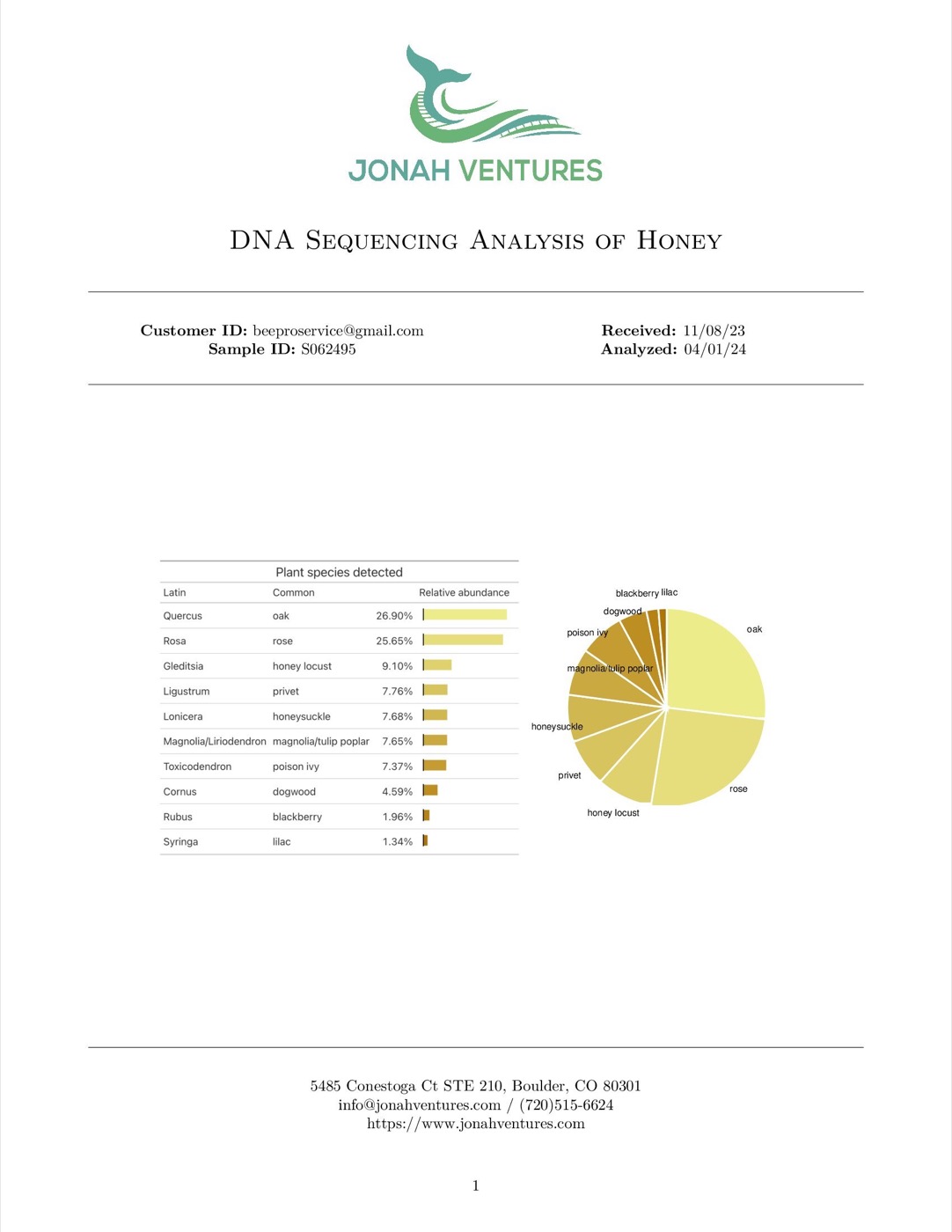
Giorgi sent a jar to an independent lab. Here are the plants the bees visited, by share of DNA.
Honey carries tiny traces of the plants the bees visited: pollen grains and bits of plant DNA. A lab can read that DNA and tell you which plants are in the jar. It is one of the clearest ways to show that honey is real and local.
In November 2023 Giorgi sent a sample of his honey to Jonah Ventures, an independent DNA lab in Boulder, Colorado. The results came back in April 2024.
The plants in the jar
| Plant | Share of plant DNA |
|---|---|
| Oak | 26.90% |
| Rose | 25.65% |
| Honey locust | 9.10% |
| Privet | 7.76% |
| Honeysuckle | 7.68% |
| Magnolia or tulip poplar | 7.65% |
| Poison ivy | 7.37% |
| Dogwood | 4.59% |
| Blackberry | 1.96% |
| Lilac | 1.34% |
What it tells you
These are trees, shrubs, and wild plants of the eastern United States. That is what local wildflower honey should look like. Honey cut with syrup, or imported and relabeled, would not show a mix like this.
Poison ivy may look strange on the list. Its flowers are a common nectar source for bees in late spring, and the honey is safe to eat.
The share of DNA is not the same as the share of nectar. Some plants shed more pollen than others. Read the list as "which plants the bees worked," not as an exact recipe.